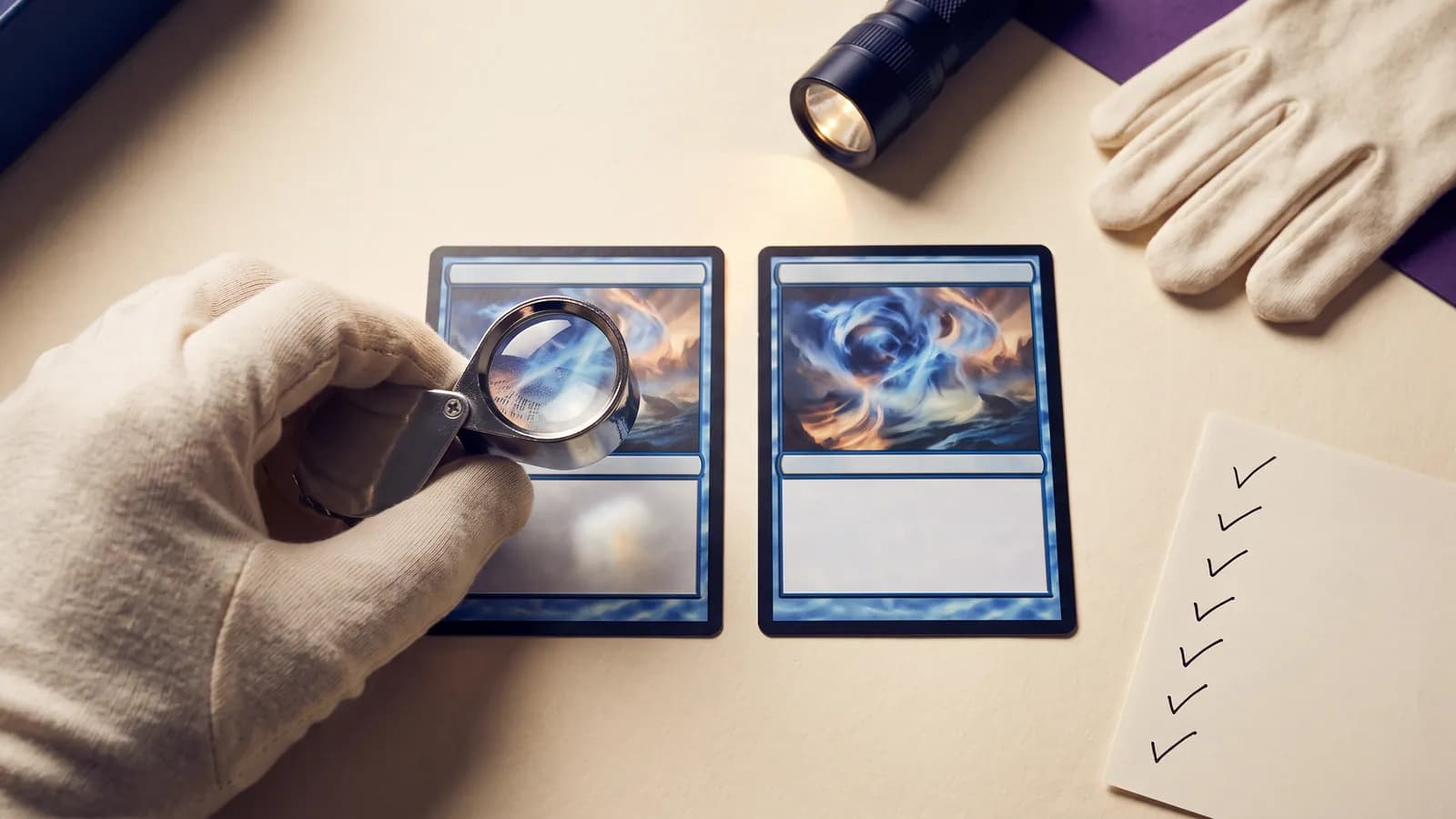
Buying or trading Magic: The Gathering cards online means trusting that what you receive is genuine. Counterfeits have improved a lot, but almost all of them still fail at least one simple test. This guide is your starting point.
You don't need to be an expert
The single biggest mistake beginners make is staring at the front artwork looking for "something wrong." Good fakes copy the artwork perfectly. The tells are almost always elsewhere: the card stock, the back, the print pattern, and the physical feel.
The three-minute first check
Before you buy, or the moment a card arrives, run these in order:
- The light test. Hold the card to a bright light. Genuine cards barely let light through because of their black inner core. A card that glows is a red flag. See the light test guide.
- Back comparison. Lay it next to a card you know is real. Differences in the brown tone or pattern sharpness jump out instantly. (Back comparison)
- Print pattern. With a cheap loupe, check for the rosette dot pattern of real offset printing. (Rosette print test)
When to go further
If anything looks off, escalate to the green dot test and, for bulk commons you don't mind destroying, the definitive rip test. For valuable cards, stop and get a professional opinion rather than risking damage.
The honest truth about "AI checkers"
No photo-based app can reliably tell real from fake. The most important tells are physical — how the card blocks light, how it bends, how the ink sits under magnification — and a flat photo simply can't capture them. Learning to inspect a card yourself takes minutes and beats any automated guess.
Start with the detection methods, and bookmark this site — we keep a running scam watch of what's circulating on marketplaces.