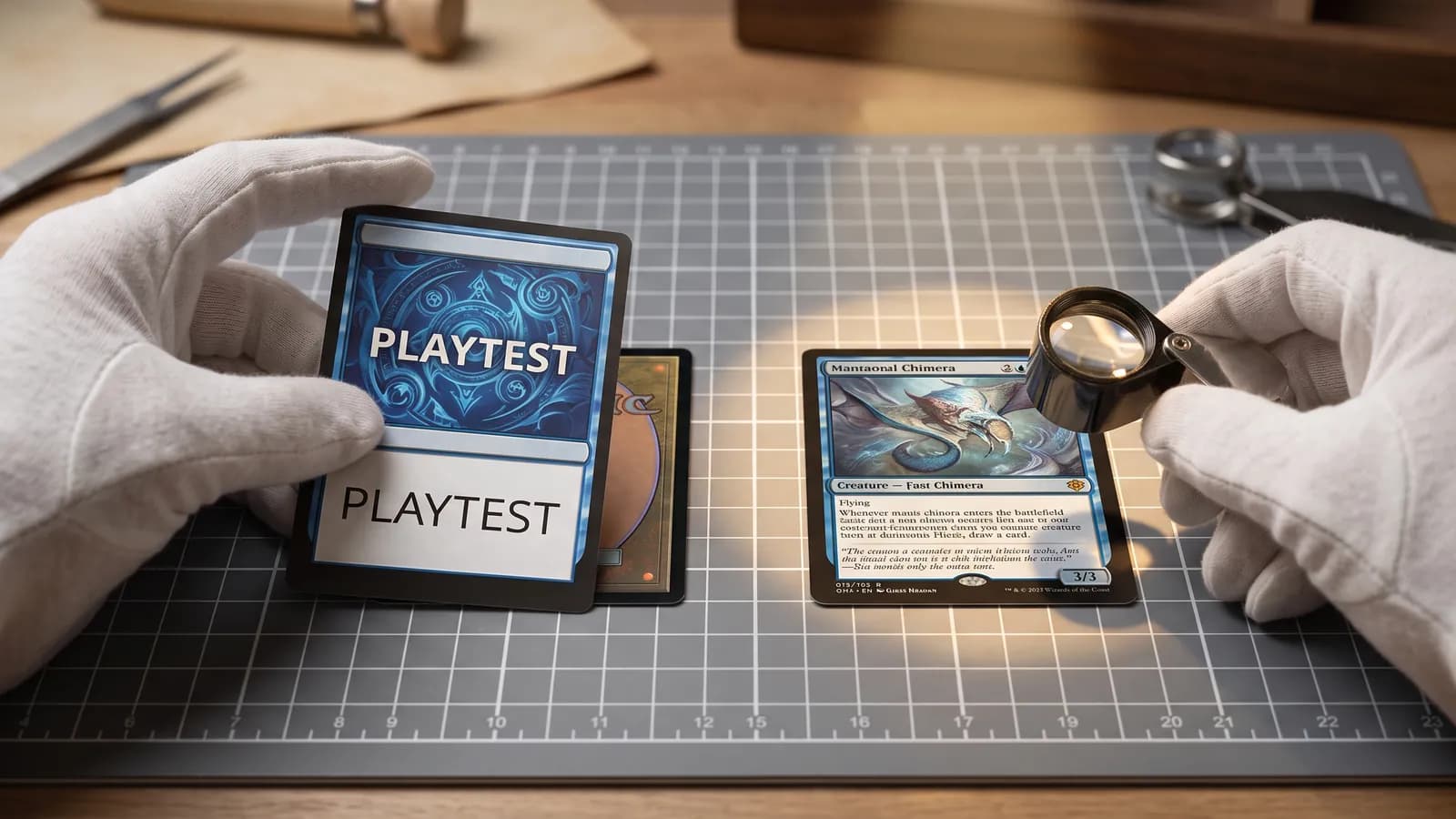
A proxy and a counterfeit can roll off the exact same printer and look identical in a sleeve. The difference isn't the card — it's the intent and the honesty around it. Getting this distinction right protects your wallet, your playgroup, and occasionally your legal standing.
The simple version
- A proxy is a stand-in for a card you and your playgroup all know isn't the real thing. Nobody's being deceived. It exists so you can play with a card you don't own or don't want to risk.
- A counterfeit is a fake made to be sold or passed off as genuine. Someone is meant to believe it's real and pay real-card money for it.
Same object, sometimes. Completely different ethics, because one is disclosed and the other is fraud.
Proxies are a table agreement, not a card type
Whether proxies are "allowed" is entirely a function of who you're playing with. At a kitchen table where everyone's fine with it, proxying an expensive dual land so you can try a deck is completely normal and harmless. At a sanctioned event, proxies aren't legal for play. Neither of those facts has anything to do with the card's print quality — it's about the context and the agreement.
This is why proxies belong in the rule zero conversation: "a few of my expensive cards are proxies, is that cool?" takes three seconds and avoids any awkwardness.
How a proxy quietly becomes a counterfeit
Here's the danger. A high-quality "proxy" made for casual play has a way of entering the secondhand market — sometimes the original owner sells it honestly as a proxy, sometimes a later seller "forgets" to mention it, knowingly or not. By the time it's three trades deep, it's being sold as genuine. The card never changed. Only the disclosure did.
That's why the same detection methods you'd use against deliberate fakes matter for proxies too. A proxy will usually fail the light test and the print pattern check just like any other non-genuine card, because it's printed the same way.
Protecting yourself as a buyer
- Buy genuine when you're paying genuine prices. If you wanted a proxy, you'd pay proxy prices. A real-card price demands a real card — verify it.
- Ask directly. "Is this a genuine card or a proxy?" A straight answer is a good sign; a vague one is your cue to run the checks or walk.
- Run the loupe tests on arrival for anything valuable, exactly as you would for a suspected counterfeit. See the recurring marketplace scam patterns for the situations where disclosed-as-real proxies tend to show up.
Proxies are a great, legitimate part of casual Magic. The problem is never the proxy — it's the silence. Keep it disclosed and everyone's fine; and when you're buying, the tools and methods are there to make sure silence doesn't cost you.