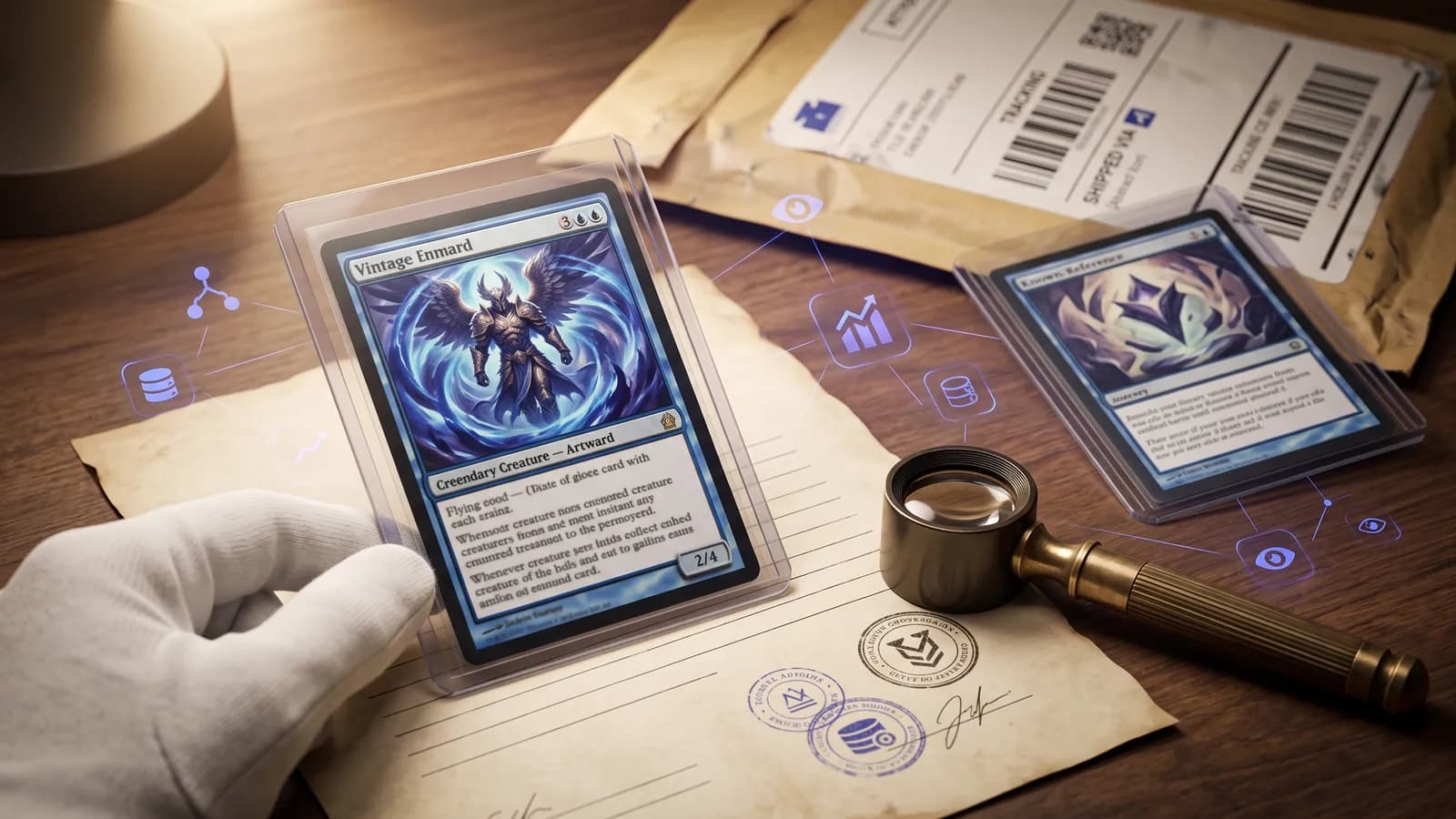
Reserved List cards — the original dual lands, the Power 9, the old-border staples that will never be reprinted — are where the real money in Magic lives. That makes them the counterfeiter's favourite target. If you're spending hundreds or thousands on a single card, the extra ten minutes of caution below is the cheapest insurance you'll ever buy.
Why these cards specifically
Two things make Reserved List cards a magnet for fakes. First, they're worth faking — the margin on a convincing counterfeit dual land is enormous. Second, they're old, so buyers expect some wear, off-centring, and printing quirks. That tolerance for "vintage character" is exactly the cover a fake hides behind. A brand-new card has to look perfect; a 1994 card gets the benefit of the doubt.
The buyer's checklist
Before money changes hands:
- Demand real photos of the actual card. Front and back, in focus, in good light — not a stock scan, not a blurry phone shot. A seller who won't provide them is a hard pass. Stock-photo listings are a classic scam pattern.
- Be suspicious of below-market prices. A Black Lotus or dual land priced well under the going rate from a low-rated seller is priced to move before the reports catch up. There are no bargains on cards this scrutinized.
- Check the seller's history. Volume, age, and feedback all matter more here than anywhere else. New accounts listing multiple high-value Reserved List cards are a red flag on their own.
- Keep payment inside buyer protection. Never get talked into a "friends and family" transfer or an off-platform deal to "save on fees." That request is the scam, almost every time.
On arrival, before you relax
Even a clean buying experience deserves a physical check on a card this valuable:
- Light test first. Genuine cards block light thanks to the black core; many fakes glow. (Light test)
- Compare the back against a known-genuine card of the same era — tone and pattern sharpness give a lot away. (Back comparison)
- Loupe the print for the genuine rosette dot pattern. (Rosette print test)
For a four-figure card, don't stop at home tests. The smart move is to get it professionally graded and authenticated — a slab is both a verdict and a resale advantage. Crucially, never run a destructive test like a bend or rip on a valuable card; those are for cheap bulk only.
When in doubt, get a second opinion
The single best habit for high-value buying: if anything feels off, pause. A real seller will wait for you to verify; a scammer will pressure you to hurry. Walk through the full detection methods and lean on the reference list of most-faked cards before you commit. The card will still be there tomorrow — and if it won't, that tells you something too.