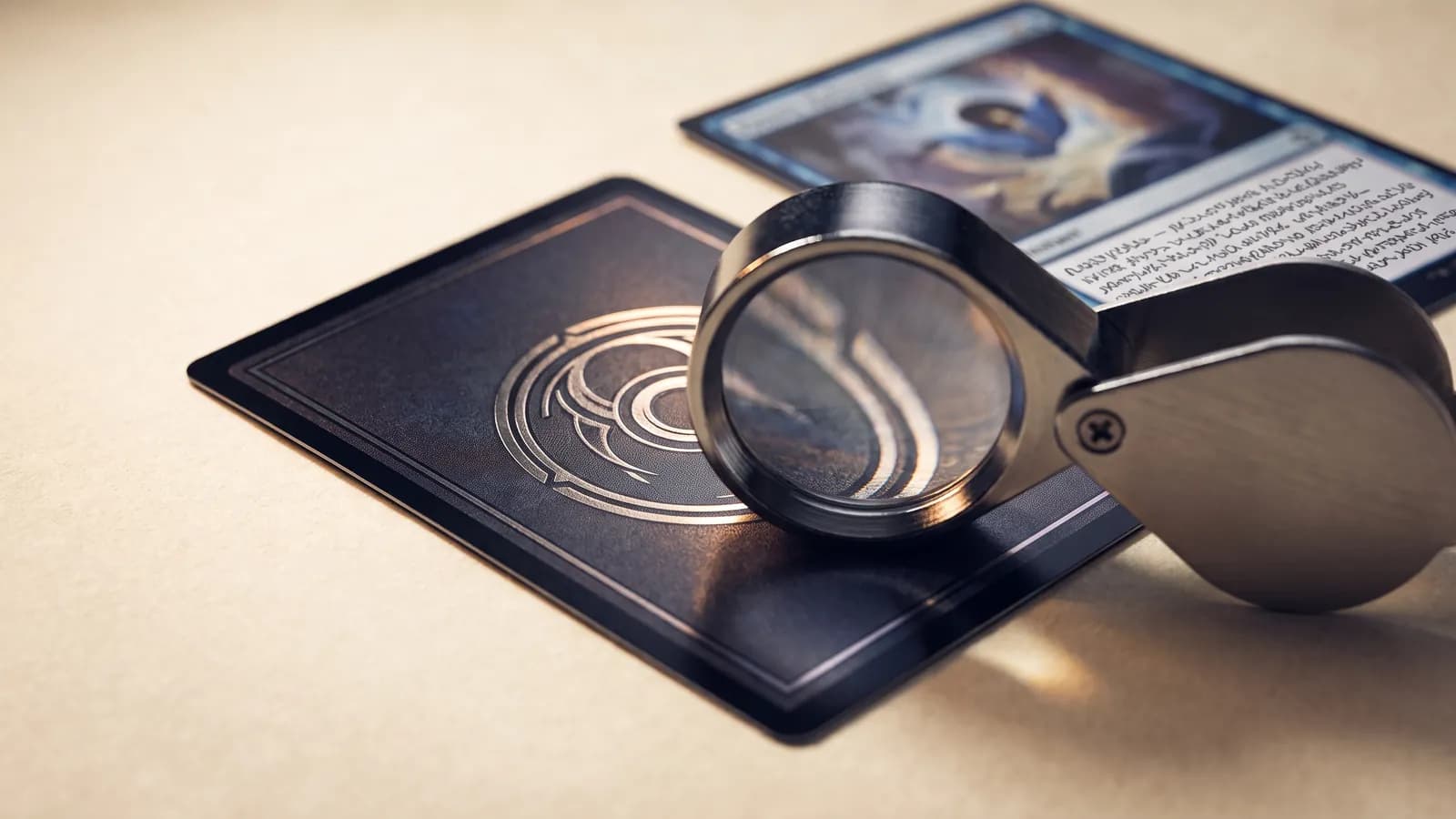
The One Ring is one of the most counterfeited modern Magic cards, and it's easy to see why: it's expensive, it's in demand for both Commander and competitive play, and the serialized hype around it means a lot of buyers are moving fast and not looking closely. If you're buying one, slow down for two minutes. These are the tells that give the fakes away.
Start with the parts fakes get wrong
Counterfeiters have gotten good at copying artwork. They're still bad at the physical card. So don't stare at the front looking for "something off" — check the things that are hard to fake:
- The light test. Hold the card up to a bright light. A genuine card barely lets light through because of its black inner core; a fake often glows. This is the fastest single check and it catches a lot of One Ring fakes. See the light test guide.
- The back. Lay it next to a Magic card you know is real. Fakes get the brown tone or the pattern sharpness subtly wrong, and side by side it jumps out. (Back comparison)
- The print pattern. Under a cheap loupe, genuine cards show a clean rosette dot pattern from real offset printing. Fakes often show a different, pixel-like or fuzzy pattern. (Rosette print test)
Watch the foil treatments specifically
The One Ring exists in several foil and special treatments, and that's where fakes get ambitious. Real foils have an even, consistent shimmer and lie flat or curve smoothly. Counterfeit foils tend to be patchy, overly mirror-like, or warped in a way genuine cards aren't. If a "foil" looks too shiny or the foiling doesn't reach the edges cleanly, treat it as suspect and run the loupe tests.
The serialized-card trap
The serialized The One Ring (the famous 1-of-1 and the numbered runs) is a magnet for scams, because a number stamped on a card makes people stop checking everything else. A real serial number is part of the print, not a sticker or a hand-written addition. If the numbering looks added-on, or the seller's story is doing a lot of work, walk away — no deal is worth it.
Before you pay
Most One Ring scams happen at the buying stage, not on arrival. Insist on a real, in-focus photo of the actual card — front and back — not a stock scan. Be extra careful with below-market prices from new or low-rated sellers; that's the classic marketplace pattern. And keep your payment inside the marketplace's buyer protection so you have recourse if it goes wrong.
If you want the full picture on this card and the others counterfeiters love, see the most-faked cards reference, and run through the complete detection methods before any high-value purchase.