The 'T' Test: The Wavy Letter Edge on the Card Back
Compare the fine edges of the 'T' in 'The Gathering' on a standard card back. This supports a broader print inspection, not a stand-alone verdict.
What this checks
The shape of the 'T' in the 'Magic: The Gathering' wordmark on the back. Genuine printing gives it asymmetric edges.
Tools: Loupe and known-genuine standard-back reference
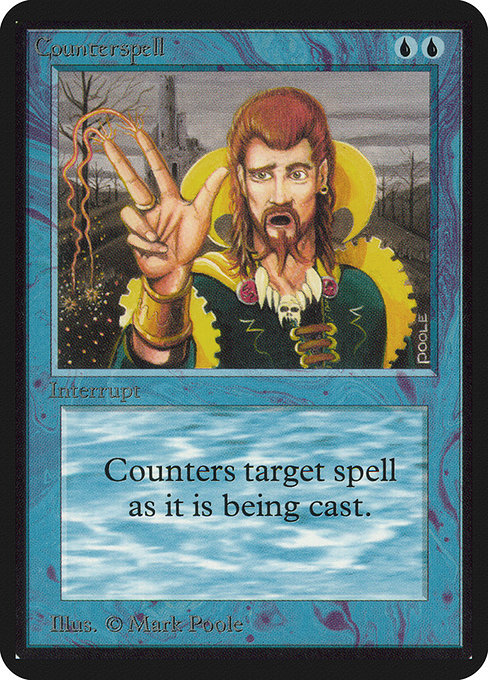
Image via Scryfall · © Wizards of the Coast.
Genuine looks like
Fine edge detail matching a comparable known-genuine back under the same magnification.
Fake looks like
Missing, blurred, or differently shaped edge details compared with the reference. Focus and print variation must be ruled out first.
Step by step
- 1Look at the 'Magic: The Gathering' text on the card back.
- 2Find the 'T' in the word 'The'.
- 3Examine its edges closely, ideally with a loupe.
- 4Compare the letter's edges with the same area of the reference card.
- 5Use any mismatch to guide further inspection of both faces and the edges.
Why it matters
It checks another part of the back, but is not independent of other back-print checks and cannot rule out a reback made with a genuine back.
Related methods
Educational guidance only — no method is a guarantee of authenticity. When in doubt on a valuable card, consult a professional grading or authentication service.